Sophie’s love-philtre enchantment
The Portable DoorSophie Pettingell’s love-philtre enchantment is a forced magical alteration of her feelings, imposed by Humphrey Wells to separate her from Paul Carpenter and bind her instead to Pip. Its importance lies not only in the threat of an unwanted attachment, but in the uncertainty it creates around emotional truth: the potion can produce love, while Sophie insists that her love for Paul existed before she drank it.
The product behind the enchantment
The spell belongs to a line of business that J.W. Wells & Co. presents as an established commercial success. Dietrich Wurmtoter introduces the JWW Valentine Express Love Philtre as a product sold for more than a century, with annual sales of about fifteen hundred gallons through wholesale and retail channels. Two tablespoons, he explains, make the drinker fall permanently in love with the first person of the opposite sex encountered. Sophie immediately fixes on the word permanent, a detail that troubles her, though she does not explain why at the time.
The business also handles covert supply and specialist applications. Dietrich describes these services as fulfilling clients’ wishes, placing the use of the potion within an ordinary business framework of products, customers, and applications. An earlier assignment illustrates the practical arrangement: Sophie is to put a measured dose in a customer’s beer, then leave before he wakes, while Paul prevents other women from entering until the client arrives. The customer is expected to sleep for twenty minutes, after which the client will be present. In that scheme, the potion’s action is planned around the drinker without his knowledge or consent; Humphrey later turns the same principle into a weapon against Sophie.
Humphrey’s intervention
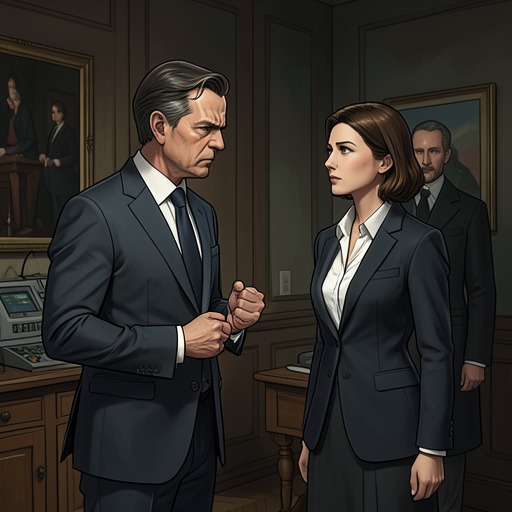
Humphrey takes the clear golden liquid from Sophie’s handbag after she and Paul have affirmed that they belong together. He describes the potion as his uncle’s recipe and considers which use of it will cause the greatest trouble. He then administers it to Sophie and arranges for its effect to begin when she wakes, roughly twenty minutes later. His intended result is that she will fall passionately and permanently in love with Pip.
Humphrey’s plan is more calculated than a simple change of partner. He expects Sophie to remain aware, at some level, that Pip is not truly the person she wants, even while the potion compels her to love him. He anticipates that Sophie, Pip, and Paul will be confined together in a bedsit, where the imposed attachment and its contradiction will keep the three in distress. The spell is therefore designed not just to create a bond but to make Sophie experience that bond as a source of prolonged conflict. Humphrey’s confidence that he can rearrange her feelings at will makes the potion an instrument of control rather than a romantic convenience.
Interruption and the question of choice
Before Sophie wakes, John Wellington Wells speaks to Paul telepathically. He says there is time to be in position when the potion takes effect, and argues that a magically secured love may be preferable to the impermanence of ordinary relationships. His reasoning treats permanence as a benefit, but it leaves aside the central issue: Sophie has not chosen the feeling the potion is meant to impose. Paul asks whether there is an antidote. John first says there is not; after Paul persists, he gives a possible remedy requiring Paul to swear off women and go away for a week or two, after which the philtre will wear off.
That proposed remedy makes Paul’s own conduct part of the enchantment’s resolution. It would require him to relinquish romantic relationships so Sophie could recover from an effect she did not choose. Paul is troubled by the prospect of taking advantage of her, while John frames the alternative as a rare chance at lasting happiness. The exchange sets two accounts of love against each other: a commercially produced, permanent attachment and a relationship whose legitimacy depends on feelings that are freely held rather than magically imposed.
Sophie’s account and the unresolved distinction
When Sophie sits up, she remembers Humphrey making her drink the potion and remembers that he intended her to fall in love with the pointy-nosed clerk. Paul tells her that she did drink it, but that the planned result did not happen. The account preserves the threat of the enchantment while establishing that Humphrey’s intended attachment to Pip has not become Sophie’s conscious experience on waking.
Paul explains the antidote as an oath that would require him to give up women and leave for a time. Sophie challenges the premise that her feelings for Paul are only an effect of the philtre. She insists that she loved him before drinking it; Paul instead attributes her certainty to the potion and speculates that she may previously have been affected by the fumes they encountered in Lancashire. Their disagreement shows how the spell’s power persists beyond its immediate administration: even when Sophie can say what she remembers and what she believes, Paul doubts whether her love is genuinely hers.
The scene does not treat Sophie’s declaration as proof that the potion has been harmless, nor does it establish that the proposed antidote has been carried out. It leaves the distinction between prior affection and magically induced feeling under pressure. In that unresolved space, Sophie’s insistence on the history of her love becomes an assertion of agency: she names her own experience against both Humphrey’s attempt to dictate it and Paul’s fear that the potion has made it unknowable.